Time with grandkids could boost health – even lifespan
By American Heart Association News


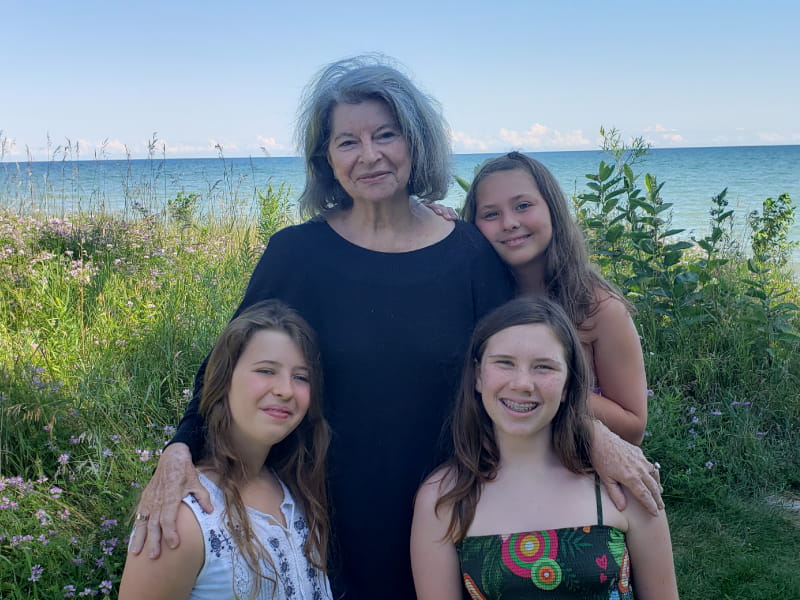
Julie Brogan's granddaughters, ages 9, 12 and 13, spend part of every summer at her home overlooking Lake Michigan in Sturgeon Bay, Wisconsin. They enjoy paddle boarding, swimming and working on projects in the professional painter's art studio.
Their experiences have mirrored what scientific researchers have found: Spending time with grandchildren can have positive health impacts. But there is a caveat. Quality is just as important as quantity.
"It's been a hard summer, but it makes me feel really good to have them in the house, and they have been very helpful to me," said Brogan, 74, who had radiation to treat non-invasive breast cancer. "Right now, it's a healing place, and they're really helping me to get through this."
A 2016 study found half of grandparents who participated at least occasionally in their grandchildren's lives were more likely to be alive five years later than those who had no involvement. And in a 2014 study, researchers reported grandparents who watched their grandchildren one day per week had higher cognitive scores than those who never did.
"Having a close connection once or twice per week can be really beneficial, both for mood and for health," said Dr. Carolyn Kaloostian, a geriatric medicine specialist in Pasadena, California. She's a clinical assistant professor of family medicine at the University of Southern California's Keck School of Medicine. "The major studies show that as long as it's not overwhelming, if there are moderate amounts of responsibility and pleasurable activities, it really does help in many ways."
Kaloostian recommends grandparents engage with their grandchildren in activities that would be healthy for both parties, such as flying a kite, walking through the park or even a slow jog.
"If we can get grandparents moving, it will improve their heart health, their brain health and mood," Kaloostian said.
It might seem like common sense that it's healthy for grandparents to spend time with their grandchildren. But Susan Kelley, a professor of nursing and director of Project Healthy Grandparents at Georgia State University in Atlanta, said the quality of the interaction is a critical factor.
"For part-time caregivers, the research is mixed," Kelley said. "Some see an improvement in mental health and others report increased stress and health issues."
Kelley's work focuses on grandparents who are raising grandchildren, a growing phenomenon in the United States.
According to experts, between 2.5 and 3 million grandparents play a parental role, something Kelley attributed largely to mental health issues, incarceration and substance abuse, much of it driven by the opioid epidemic.
"It's more than just feeding and clothing the children," Kelley said. "The grandparents are dealing with their own emotional trauma, because something has gone wrong in the lives of their adult child."
This can take a toll on a grandparent's health.
A study published in June in The Review of Economics of the Household reported grandparents who provide 10 additional hours of child care per month are more likely to experience depressive symptoms such as sadness, pessimism, insomnia, fatigue and chronic pain. It's part of a growing body of research demonstrating that grandparents in a custodial role experience lower levels of physical and mental health.
For Brogan, her recent fatigue is a side effect of radiation therapy. While she has not been as physically active with her grandchildren this summer as she normally would be, it hasn't dampened her enthusiasm about their extended visit.
"We have a lot of interaction, sometimes it's physical and sometimes it's a more mental, creative exchange," Brogan said. They often work side-by-side in her art studio, where the girls recently made "healing dolls" out of old cloth hospital gowns.
"They are lovely to have around, and they certainly keep me energetic in many ways."
If you have questions or comments about this story, please email [email protected].